caic
Coding Agents in Containers. Manage multiple AI coding agents running in parallel in isolated containers powered by Docker or Podman. Access them from your phone with Tailscale. All private.
What is caic?
caic lets you run AI coding agents (Claude Code, Codex, OpenCode, Pi) in isolated md containers, orchestrated through a unified web UI and Android app. Each task runs in its own container so agents never interfere with each other or your local checkout.
Platform support
caic is supported on Linux, macOS, and Windows via WSL2.
Key features
- Parallel agents — run many agents simultaneously on different branches
- Flexible runtimes — use Docker and Podman side by side, then choose the runtime for each new task
- Resilient sessions — server restarts don't kill running agents; a relay process inside each container keeps agents alive across SSH disconnects
- Recoverable workspaces — fork a running, stopped, or crashed task to try a new direction without losing its workspace
- Task visibility — review setup output and full failure details, track provider quota reset times, and wrap long lines in diffs
- Fast task actions — right-click a task card to push, stop, revive, purge, fork, or compact it without opening the task
- Forge integration — automatic PR/MR creation and CI monitoring for GitHub and GitLab
- Lightweight — single Go binary, low memory and CPU footprint
- Web UI — SolidJS frontend embedded in the binary
- Task inspection: view launch config, runtime image, platform, caches, mounts, and diagnostics for each task
- Voice control — supervise and steer agents hands-free with voice mode
- MCP server — connect Claude or ChatGPT to your tasks through the MCP endpoint
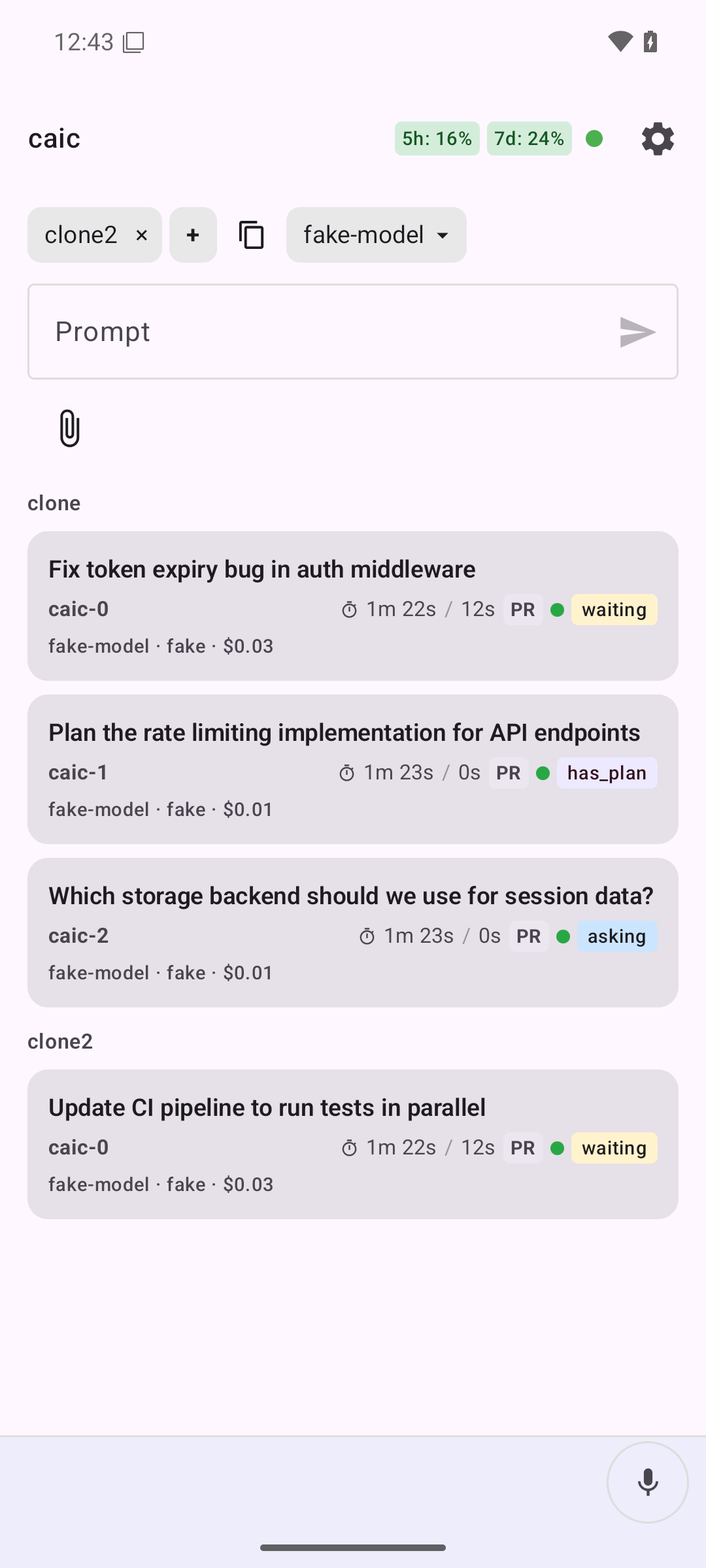
- Android app — voice-first companion app to manage agents from your phone
Screenshots
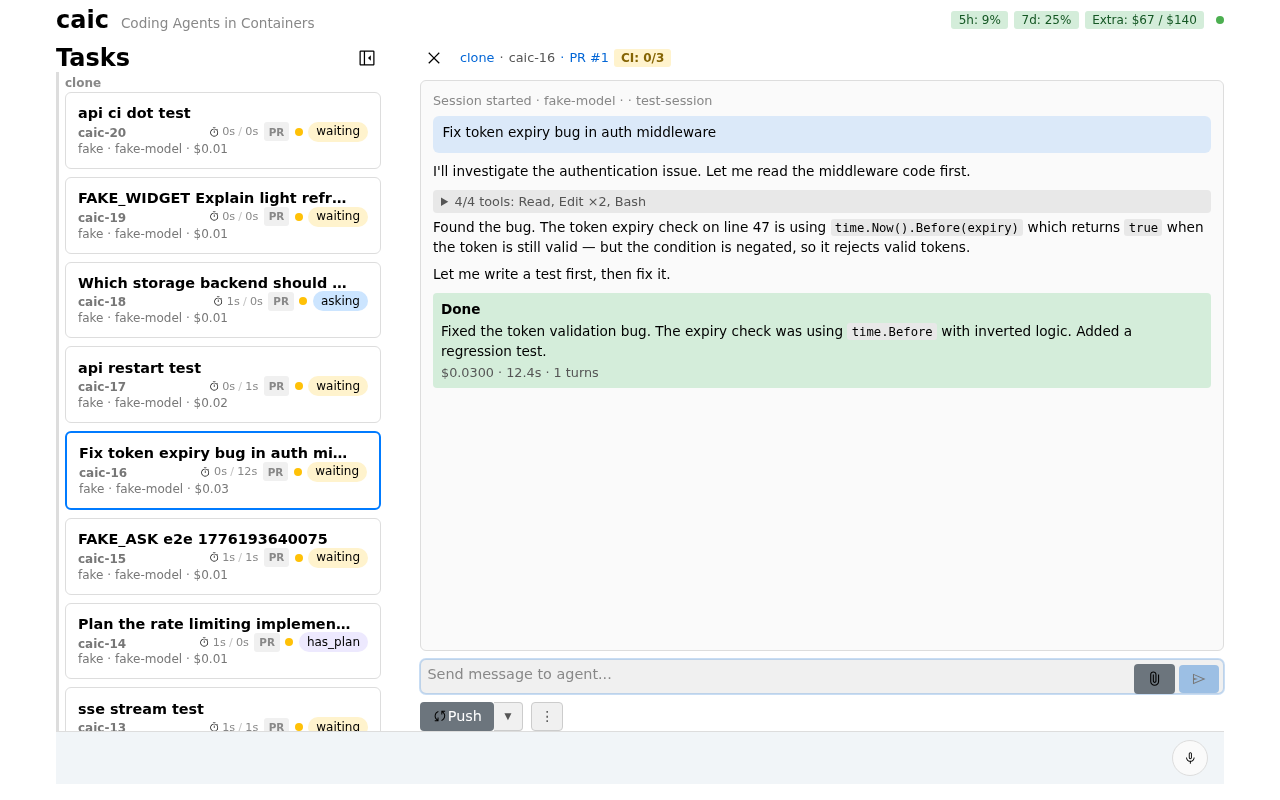
Interacting with an agent
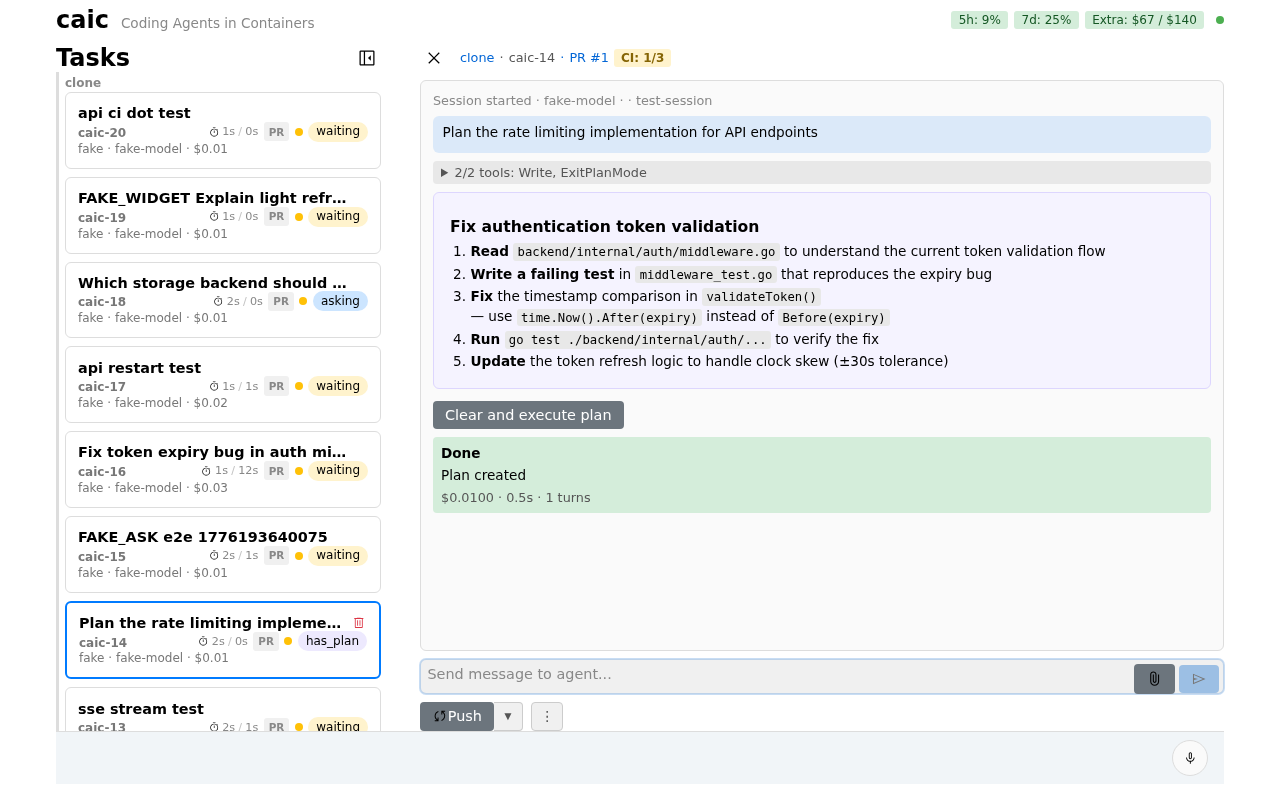
Plan mode
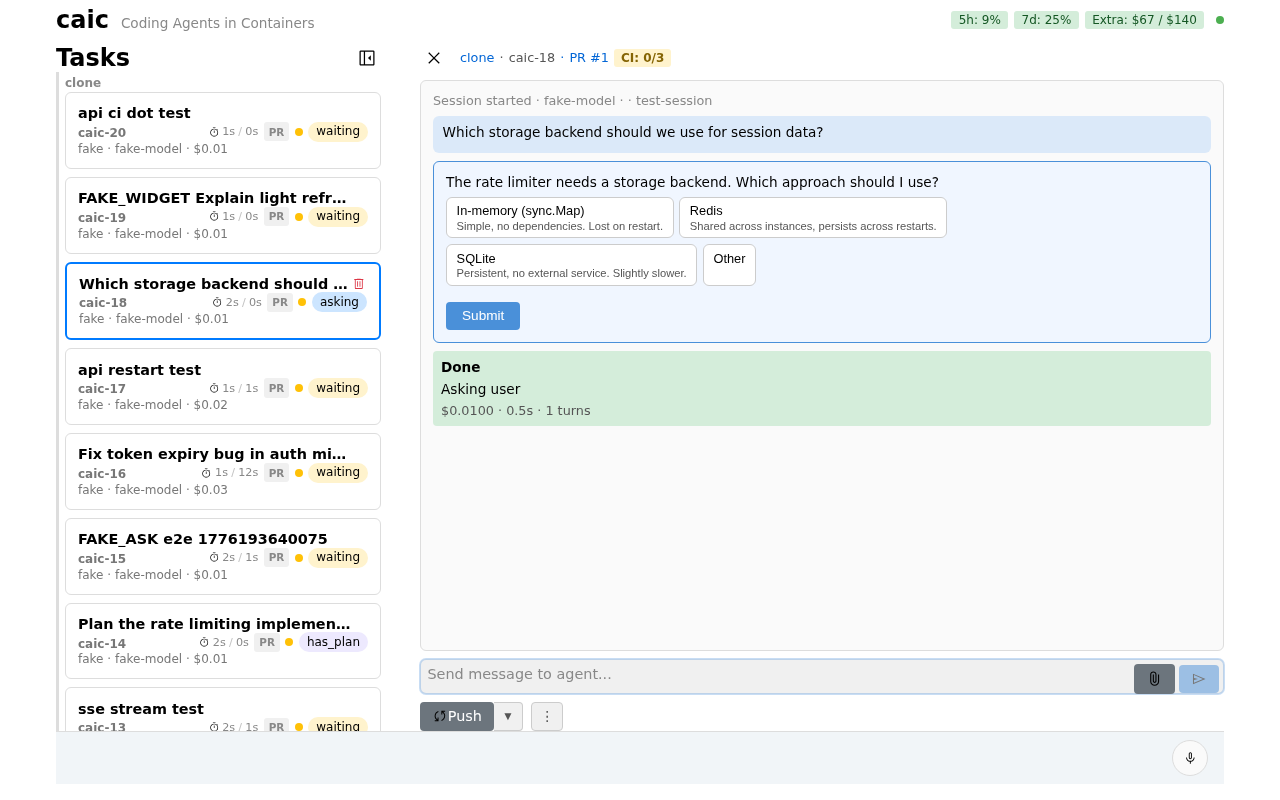
Ask mode — agent asks for user input
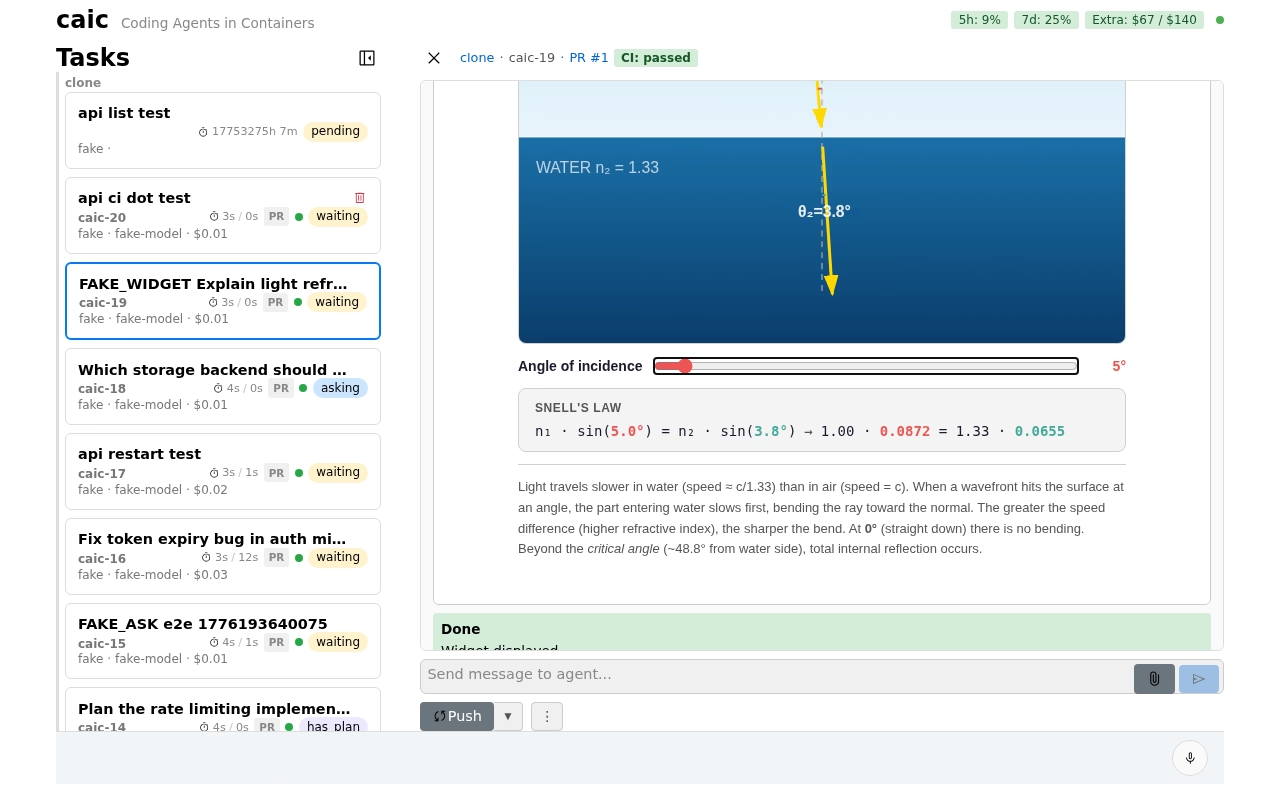
Widget — generative UI
Android app
Quick start
bash
curl -fsSL https://caic.xyz/install.sh | bashSee Installation for full setup, and Configuration for config file reference and service setup.
Documentation
- Installation — prerequisites, platform notes, from-source builds
- Configuration — config file reference, auth modes, HTTPS exposure
- GitHub Integration — automatic PR creation and CI monitoring
- GitLab Integration — automatic MR creation and CI monitoring
- Voice — hands-free supervision with embedded, standalone, or fully local gateways
- MCP Server — connect external MCP clients over OAuth
- Android App — voice-first companion app
- Architecture — system components, task lifecycle, relay, startup
- Design — design rationale, trade-offs, core principles
- Security — authentication, credential handling, isolation model
Getting help
- GitHub issues: caic-xyz/caic
- Discord: caic-xyz community
- Include
caic -versionoutput and the error message when reporting issues